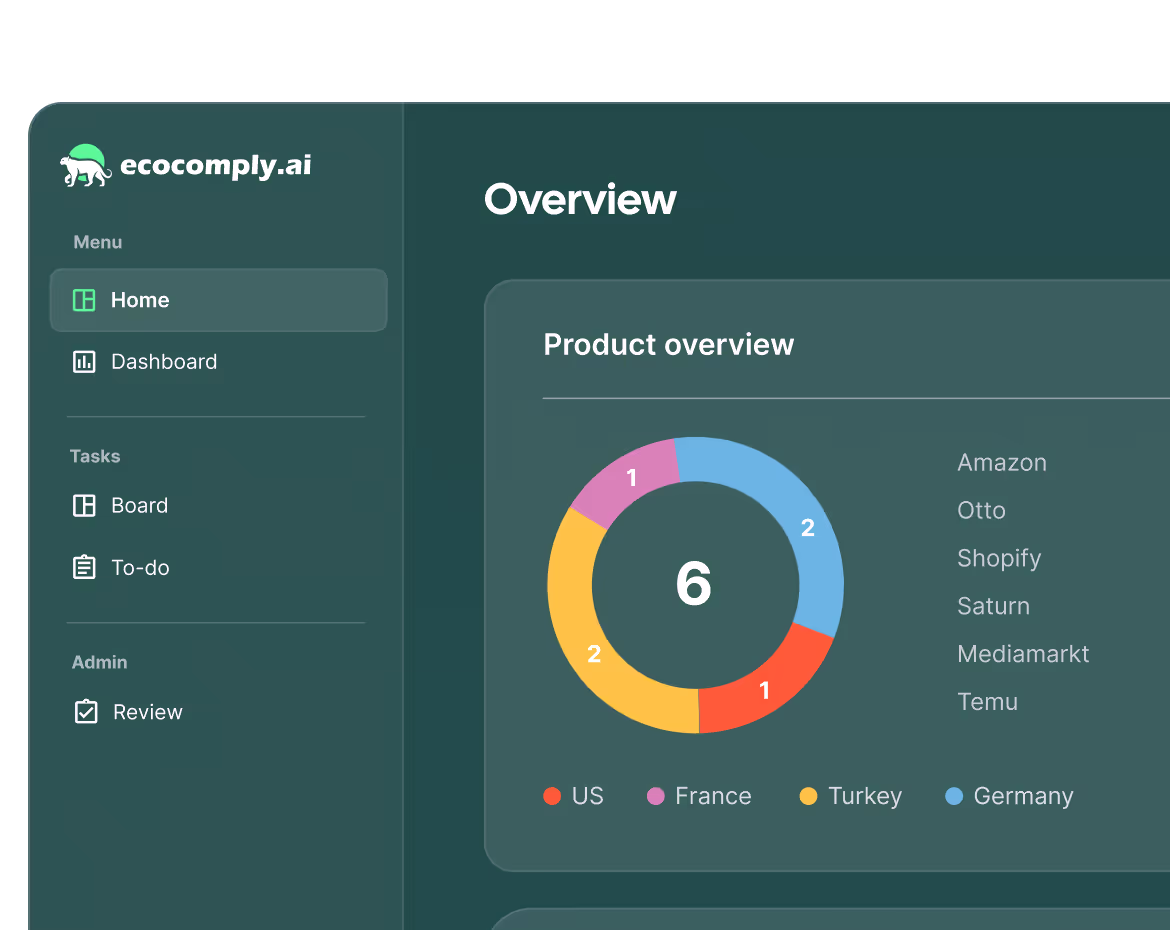
RoHS restricts ten substances in electrical and electronic equipment — measured per homogeneous material, not per product. EcoComply scopes which category and exemptions apply to you, verifies supplier declarations down to material level, and delivers the EN IEC 63000 technical documentation as part of our fixed-price CE marking service.

Takes 2 minutes. No commitment required.

















You know your product needs to be RoHS compliant. But which of the 11 categories you fall under, which exemptions apply, and what evidence survives an audit are rarely clear upfront.
Hourly billing with no visibility. The invoice keeps growing and you never know the final cost.
Back-and-forth with consultants, labs, and regulators. Your product launch gets delayed again and again.
Which of the ten substances apply, what counts as a homogeneous material, and whether an Annex III exemption covers you. Diluting across the whole product is legally meaningless.
From upload to RoHS documentation in 4 clear steps.
Product specs, BOMs, datasheets, existing test reports. Whatever you have.
Our experts determine which of the 11 RoHS categories your product falls under, which Annex III exemptions apply, and what evidence each homogeneous material needs.
We prepare your complete technical file, Declaration of Conformity, and supporting evidence.
We verify supplier declarations and coordinate any analytical testing required, then assemble the EN IEC 63000 technical documentation and Declaration of Conformity.
RoHS is handled inside our fixed-price CE marking service. The €3,800 covers the full CE marking; any laboratory analysis is billed separately, at cost.
Identify which RoHS category, substances and exemptions apply to your product
Comprehensive risk evaluation per applicable directives
Ensure labeling and user documentation meet EU requirements
Audit-ready CE technical documentation package
Legally compliant DoC drafted and ready to sign
Priority slots for RoHS analysis, EMC, safety and compliance testing
Chase and verify compliance documentation from your suppliers
AI-powered monitoring of regulations relevant to your product portfolio, proactive updates and expert support on demand.
RoHS sits under Directive 2011/65/EU, alongside the other directives your electronics may need.
See why 100+ manufacturers chose EcoComply over traditional compliance firms.
"The 48-hour compliance preview was more useful than weeks of work with traditional consultants. EcoComply made a complex product launch feel straightforward."
Co-Founder, BMX, Consumer Electronics
"I appreciate the speed and transparency of EcoComply services, that tell me what are requirements applicable on our product for CE marking, and manage the whole testing process for us, really hassle free, the communication is working very well!"
Manufacturer
Quick answers to the most common RoHS compliance questions
Is RoHS required for CE marking?
Yes, for electrical and electronic equipment in scope. RoHS Directive 2011/65/EU is a CE marking directive, so RoHS compliance is declared in the same EU Declaration of Conformity that carries the CE mark.
What are the ten restricted substances and their limits?
Lead, mercury, hexavalent chromium, PBB, PBDE and the four phthalates DEHP, BBP, DBP and DIBP are each limited to 0.1% by weight. Cadmium is the exception at 0.01%. The four phthalates were added by Delegated Directive (EU) 2015/863.
What does “per homogeneous material” actually mean?
The limits apply to each homogeneous material inside the product, not to the product overall. A single power cable typically contains six or more homogeneous materials. A product that is 0.0001% lead overall still fails if any one material inside it exceeds 0.1%.
Do I need laboratory testing for RoHS?
Not always. EN IEC 63000:2018 lets you build the technical documentation from supplier declarations, material declarations and, where needed, analytical test reports. Testing is targeted at the materials where the risk sits rather than applied to everything.
Which standard applies to RoHS documentation?
EN IEC 63000:2018 is the only harmonised standard under RoHS and the only one conferring presumption of conformity. It superseded EN 50581 with effect from 18 November 2021, so documentation still citing EN 50581 is out of date.
Share your product and target markets. Get a personalised proposal with scope, transparent fees and an expected timeline. No obligation.